The Fire Department Information Center (FIZ) is a central point of contact for fire alarm system operations (BMA operations). This is where the most important information comes together, which is crucial for assessing the situation, orienting oneself in the building, and taking the necessary measures. Good training at the FIZ is essential to ensure that emergency services can work safely and in a structured manner in the event of an emergency.
At the same time, many firefighters have little opportunity to practice operating the equipment on a regular basis in their everyday work because real-life systems are often not allowed to be used for training purposes.
What is truly relevant at FIZ
In practice, the FIZ is not concerned with knowing every detail of a system, but rather with quickly and accurately capturing the core information:
1. Which detector group triggered the alarm?
That's the most important information to get you started.
The detector group determines which route card is required and which part of the building needs to be checked.
2. Which route map belongs to it?
Without the right map, structured exploration is virtually impossible.
It shows the way to the alarm, relevant rooms, junctions, and special features in the building.
3. Have other detectors been triggered?
A classic point that is often overlooked when you have little experience.
4. Are there any indications of fire extinguishing systems or special areas?
4. Gibt es Hinweise auf Löschanlagen oder besondere Bereiche?
Active firefighting areas, elevator areas, or technical rooms may require additional steps.
This is often all that is needed for a solid initial assessment, but it is essential that this information is interpreted correctly and placed in the right order.
Typical uncertainties when dealing with the FIZ
There are often typical challenges when dealing with FIZ:
- The sequence of events at the FIZ is unclear.
- The provision is attempted too early
- Further detector activations are overlooked
These points are not a sign of a lack of competence, but simply a result of a lack of opportunity to practice. Those who are unable to practice regularly find it difficult to memorize the procedures.
The typical sequence of events during a fire alarm system deployment
To ensure that a fire alarm system is deployed calmly and without delay, a clear sequence of actions is required. The individual steps can be easily trained and give the team confidence—regardless of the building in which the system is installed.
- Open the FSD and remove the master key.
- Open and enter buildings.
- Find and open the FIZ.
- Turn off the buzzer.
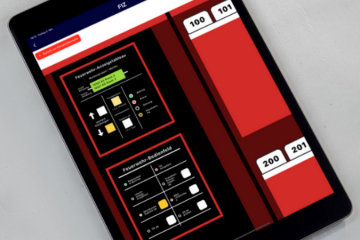
- Determine triggered detector group(s) at the FAT.
- Take the appropriate route map(s) and orient yourself.
- Exploration using a route map to the triggered detector.
- Feedback to the operations center.
- Set aside the BMZ in accordance with regulations.
- Put away the running card.
- Filling out the duty log.
- Close FIZ.
- Leave and lock the building.
- Put the master key back and close the FSD.
Even though the individual facilities and buildings are structured differently, the structure of this process remains similar. This makes it all the more important to practice it regularly so that it works smoothly when needed.
Why standardized processes are so important at FIZ
Working on the fire alarm system is often unspectacular—until suddenly it isn't anymore.
Especially at:
- industry
- nursing homes
- large schools
- hotels
- hospitals
Everything must run smoothly, regardless of who is on duty.
Proficient use of the FIZ ensures that:
- Detectors can be found more quickly
- Double alarms immediately stand out
- Running cards are securely assigned
- Feedback to the operations management is clearer
- the deployment proceeds in a calmer and more structured manner
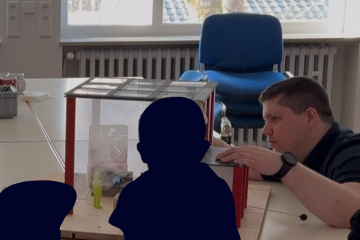
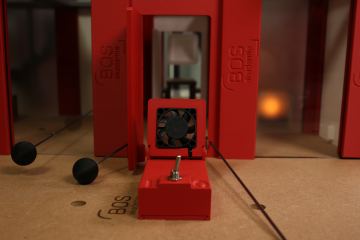
This can only be trained through regular simulation – which is exactly why we developed the BMA-Trainer .
Conclusion: FIZ operation only becomes safe if you practice it regularly.
The FIZ provides the most important information for a BMA deployment. But only if the fire department correctly interprets the displays and has internalized the procedure.
Since real equipment can hardly be used for training purposes, digital training offers an ideal opportunity to teach operation in a structured and realistic manner.
With the BMA-Trainer Complete FIZ processes can be run through, errors detected and corrected, and, above all, confidence gained before it matters in real-world use.